

Parents often lie awake wondering if their baby is okay. That tiny cry in the night can spark instant worry. Yet, technology steps in to ease those moments. Video baby monitors with cameras and night vision let you see and hear your child clearly, even in the dark. These devices connect you visually to the nursery. One popular option is the baby monitor with night vision that offers reliable features for new parents. According to a study published in BMJ Paediatrics Open, parents using sleep monitoring wearables reported decreased anxiety and better sleep quality when devices worked well. Additionally, the American Academy of Pediatrics emphasizes keeping monitor cords out of reach for safety. In fact, the U.S. baby monitor market grows at a compound annual rate of 8.11%, showing how families value this tool.
Why Choose a Video Baby Monitor?
New parents juggle endless tasks. Sleep becomes a luxury. However, a video baby monitor changes that dynamic. It provides real-time visuals of your infant. You check on breathing patterns without disturbing rest. Moreover, night vision ensures clarity in low light. Families appreciate this feature during nighttime feedings.
Transitioning to parenthood brings uncertainties. Video monitors address them directly. For instance, you spot if the blanket slips off. Or you notice unusual movements quickly. Research from Children’s Hospital of Philadelphia highlights that while no proven medical benefits exist for healthy babies, the reassurance factor stands out. Consequently, parents feel more in control. They respond faster to needs. Overall, this tool fosters confidence in daily routines.
Beyond basics, these monitors evolve with technology. Some integrate smart home systems. Others track sleep data over time. Yet, the core appeal remains visual connection. Parents share stories of catching early signs of discomfort. Such experiences build trust in the device. Therefore, investing in one enhances family harmony.
Key Features to Look For in a Baby Monitor
Selecting the right monitor involves careful thought. Start with video quality. High-definition cameras deliver sharp images. You see fine details like facial expressions. Additionally, wide-angle lenses cover more of the crib area. This prevents blind spots in the view.
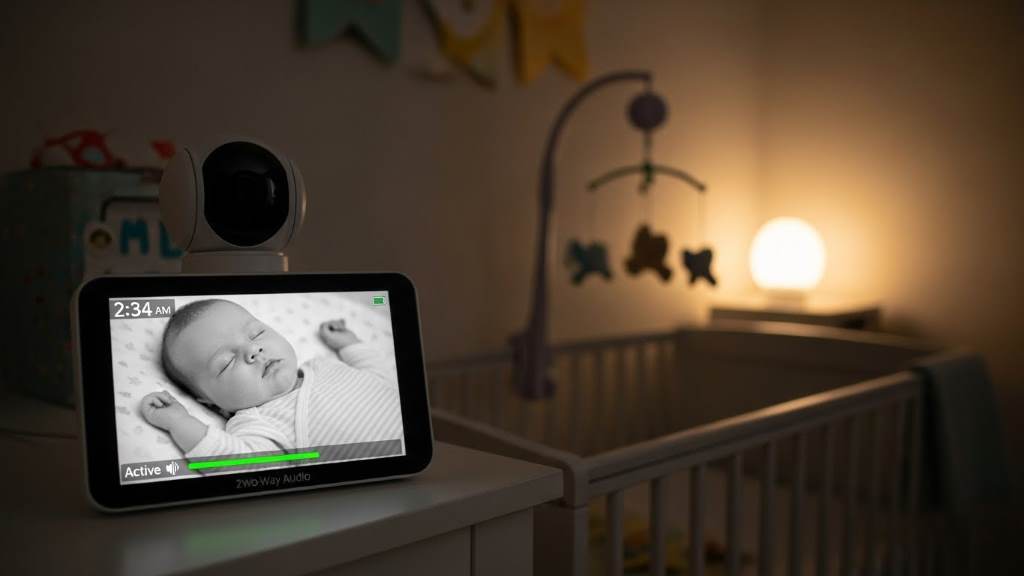
Night vision ranks high on the list. Infrared technology illuminates dark rooms. It switches automatically in low light. As a result, you monitor your baby seamlessly through the night. Furthermore, color modes during the day add vibrancy to feeds.
Audio capabilities matter too. A two-way audio baby monitor lets you speak to your child. You soothe them with your voice from another room. Meanwhile, sensitive microphones pick up soft sounds. Background noise reduction filters out distractions. Thus, you hear only what counts.
Range and connectivity play crucial roles. Non-Wi-Fi models offer secure signals up to 1,000 feet. Wi-Fi versions connect via apps for remote access. However, ensure strong encryption to protect privacy. Battery life supports portable use. Rechargeable units last hours on a single charge.
Extra sensors enhance functionality. Temperature monitors alert to room changes. Humidity trackers maintain comfort levels. Some include lullaby players for calming tunes. Motion detection notifies you of activity. In addition, pan-tilt-zoom features adjust the camera remotely. These elements combine for comprehensive oversight.
Top Picks for Video Baby Monitors in 2026
Experts test numerous models each year. Consumer Reports evaluates privacy and ease of use in their reviews. Based on recent assessments, several stand out. We explore them below with detailed insights.
Nanit Pro Smart Baby Monitor
This model excels in smart features. The camera mounts over the crib for bird’s-eye views. It uses AI to analyze sleep patterns. Parents receive insights on routines via an app. Night vision provides crisp black-and-white images. You track milestones like rolling over.
Users praise the breathing motion monitoring. A band wraps around the baby’s torso gently. It detects movements without wires. Consequently, alerts come for irregularities. The two-way talk function integrates smoothly. You sing lullabies or chat from afar. Setup takes minutes with wall mounting. Overall, it suits tech-savvy families seeking data-driven parenting.
VTech V-Care Smart Baby Monitor VC2105
VTech focuses on reliability. The 5-inch screen displays vibrant colors. Night vision reaches up to 30 feet clearly. You pan and tilt the camera for full room coverage. Built-in night light soothes babies gently.
The system includes multiple cameras for expanding families. Switch views easily on the parent unit. Audio sensitivity adjusts to your preference. As such, it captures whispers or cries promptly. Parents note the long battery life for all-day use. This monitor adapts to various home layouts effectively.
Infant Optics DXR-8 Pro
Infant Optics delivers secure, non-Wi-Fi performance. The interchangeable lens system customizes views. Choose wide-angle for nurseries or zoom for close-ups. Night vision activates seamlessly in darkness.
Active noise reduction enhances sound clarity. You hear your baby over household noises. The monitor’s range extends outdoors reliably. Families with larger homes benefit greatly. Additionally, temperature display keeps you informed. Users share how it eases nighttime checks without apps.
HelloBaby Monitor with 4.3-Inch Display
HelloBaby offers straightforward functionality. The large screen shows detailed video feeds. Infrared night vision ensures visibility in complete dark. You zoom in digitally for closer looks.
Two-way communication stands out here. Speak calmly to settle your infant. The device includes eco-mode for power saving. It reduces emissions when quiet. Parents appreciate the plug-and-play setup. No complex apps needed. This choice fits busy households perfectly.
Eufy SpaceView Baby Monitor
Eufy prioritizes privacy with local storage. The 5-inch HD screen rotates for optimal viewing. Night vision covers wide areas without distortion. You add up to four cameras for multi-room monitoring.
The battery lasts up to 30 hours in eco-mode. Audio alerts notify you of sounds. Furthermore, lullabies play automatically on timers. Families report fewer disturbances at night. This monitor grows with your child’s needs seamlessly.
Owlet Cam Smart Baby Monitor
Owlet combines video with health insights. The camera streams HD footage to your phone. Night vision uses advanced sensors for detail. Background audio runs even with the screen off.
Predictive sleep notifications help plan routines. You receive tips based on data. The secure app encrypts connections. Parents value the integration with other Owlet products. It creates a holistic monitoring ecosystem.
How to Set Up Your Baby Monitor Effectively
Installation begins with placement. Mount the camera high above the crib. Angle it downward for full visibility. Avoid direct sunlight on the lens. Secure all cords behind furniture.
Next, test the signal strength. Walk around your home with the parent unit. Check for interference from walls or appliances. Adjust channels if needed. Pair additional cameras one by one.
Customize settings for your family. Set audio volume to comfortable levels. Enable night vision manually first. Program alerts for temperature thresholds. Practice using two-way talk.
Finally, integrate into daily life. Place the monitor on your nightstand. Use it during naps for quick peeks. Share access with caregivers securely. Regular checks ensure everything functions smoothly.
Related:
Starting a Small Business in Baby Products: A Guide to Success
Safety Tips for Using Baby Monitors
Safety starts with cord management. Keep all wires at least three feet from the crib. Use cord covers for added protection. The American Academy of Pediatrics stresses this to prevent strangulation risks.
Position the camera stably. Avoid shelves that could tip over. Secure mounts with screws if possible. Test stability by gently shaking.
Monitor privacy diligently. Change default passwords on Wi-Fi models. Use two-factor authentication. Regularly update firmware for security patches.
Follow safe sleep practices. Monitors complement, not replace, guidelines. Place babies on their backs in bare cribs. A study in Pediatrics notes devices shouldn’t substitute for these basics.
Educate babysitters on usage. Show them features like alerts. Encourage reporting any issues promptly. Consistent habits maintain safety standards.
Common Mistakes Parents Make with Baby Monitors
Many overlook interference sources. Microwaves or cordless phones disrupt signals. Place the base away from them. Test in different spots for best reception.
Over-relying on the monitor happens often. Always check in person for cries. Visuals help, but direct interaction builds bonds. Balance tech with hands-on care.
Ignoring battery maintenance shortens life. Charge units fully before first use. Avoid overcharging overnight. Replace old batteries timely.
Forgetting privacy settings exposes risks. Hackers target weak networks. Strengthen your Wi-Fi with strong passwords. Monitor app permissions closely.
Placing cameras too low creates hazards. Babies reach out as they grow. Elevate positions early. Reassess setup every few months.
Benefits Backed by Research
Studies show monitors reduce parental stress. A BMJ Paediatrics Open report found improved sleep when devices perform reliably. Parents wake less often, knowing they can check visually.
Video feeds enhance understanding. Research in BMJ Open Quality indicates better interpretation of baby behaviors through visuals. You distinguish between fussing and real needs.
Market trends reflect growing adoption. Transparency Market Research notes rising preference for video options due to safety concerns. Families invest more in features like night vision.
Case studies from parents highlight practicality. One family caught early teething discomfort via monitor alerts. Quick response prevented escalation. Another used data to adjust sleep schedules successfully.
Overall, evidence supports monitors as valuable aids. They empower informed parenting decisions.
Integrating Monitors into Family Life
Monitors fit various lifestyles. Working parents check from offices via apps. Stay-at-home folks use them for multitasking. Grandparents assist remotely with shared access.
Storytelling moments arise too. Capture first smiles on video recordings. Share clips with family. These devices preserve memories alongside monitoring.
Adapt for travel. Portable models pack easily. Battery-powered units work in hotels. Maintain routines on the go.
Combine with other tools. Pair with white noise machines for better sleep. Use alongside baby gates for safety layers.
Evolve usage as babies grow. Toddlers benefit from two-way chats. Encourage independence while watching.
Conclusion
Video baby monitors with cameras and night vision transform parenting. They offer clear views, audio interaction, and peace of mind. Key features like high-definition video and sensors address daily needs. Top models such as Nanit Pro and VTech provide reliable options. Setup and safety tips ensure effective use. Research confirms reduced anxiety and better sleep for families. Now, select a monitor that matches your home. Start enjoying restful nights today.
FAQs
FAQ: What Makes Night Vision Essential in Baby Monitors?
Night vision allows parents to see their baby in dark rooms. It uses infrared light for clear images. This feature activates automatically. As a result, you monitor without turning on lights. Disturbances stay minimal.
FAQ: How Does Two-Way Audio Work in These Monitors?
Two-way audio lets you hear and speak to your baby. Press a button on the parent unit. Your voice plays through the camera speaker. Babies recognize familiar sounds. Comfort comes quickly from afar.
FAQ: Are Wi-Fi Baby Monitors Safe for Privacy?
Wi-Fi models include encryption for security. Change passwords regularly. Use trusted brands with updates. Avoid public networks. These steps protect your feeds effectively.
FAQ: Can Baby Monitors Help with Sleep Training?
Yes, monitors assist in sleep training. Observe patterns without entering the room. Use audio to soothe gently. Track progress over time. Consistency builds better habits.
FAQ: What If the Monitor Signal Drops?
Signal drops occur from distance or interference. Move closer to the camera. Clear obstacles. Switch channels on the device. Test in advance for reliability.
References


Leave a Reply