
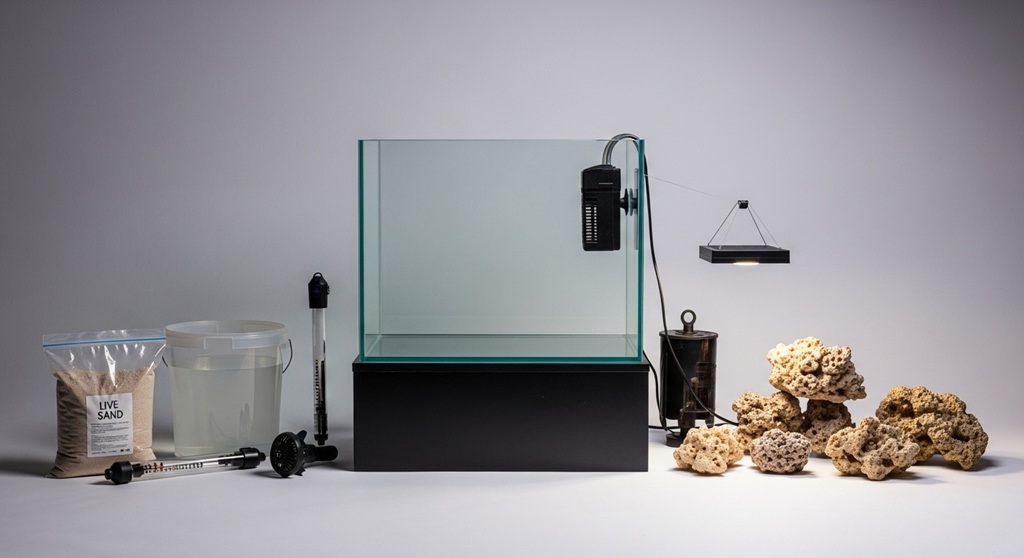
A beginner reef tank is a saltwater aquarium designed to support live corals, fish, and beneficial marine organisms. Unlike a basic saltwater fish-only aquarium, a reef tank recreates a miniature coral reef ecosystem using live rock, filtration systems, lighting, and controlled water chemistry.
Many people enter the hobby because coral reef aquariums offer something freshwater tanks cannot: living coral structures that grow over time and interact with fish and microorganisms. According to a study by the Marine Aquarium Societies of North America (MASNA), reef aquariums are one of the fastest-growing segments of the home aquarium hobby due to improvements in equipment reliability and beginner-friendly reef kits.
However, beginners often face one major challenge: knowing how to set up a reef tank correctly from the start. Poor equipment choices or unstable water chemistry can lead to coral loss, algae outbreaks, or fish stress.
This guide explains saltwater aquarium basics and provides a practical reef tank equipment list with a clear step-by-step setup process. Whether you are setting up your first 20-gallon reef aquarium or planning a larger tank, this tutorial will help you avoid common beginner mistakes and build a stable marine environment.
By the end, you will understand how to assemble equipment, cycle the tank, introduce livestock safely, and maintain a thriving reef ecosystem.
What Equipment Do You Need for a Beginner Reef Tank?
Quick answer: A beginner reef tank requires an aquarium, filtration system, protein skimmer, reef lighting, heater, powerheads, live rock, substrate, salt mix, and water testing kits.
Choosing the right equipment is the foundation of a successful reef aquarium. Unlike freshwater setups, reef tanks rely on stable salinity, strong water movement, and specialized lighting to keep corals alive.
Essential Reef Tank Equipment List
| Equipment | Purpose | Beginner Tip |
|---|---|---|
| Aquarium Tank | Holds the saltwater ecosystem | Start with 20–40 gallons for stability |
| Protein Skimmer | Removes organic waste | Reduces algae and improves water clarity |
| Reef Lighting | Supports coral photosynthesis | LED reef lights are energy-efficient |
| Powerheads | Create water flow | Essential for coral health |
| Live Rock | Provides biological filtration | 1–1.5 pounds per gallon |
| Heater | Maintains stable temperature | Keep water between 24–26°C |
| Salt Mix | Creates marine salinity | Use reef-grade salt |
| Water Test Kits | Monitor parameters | Test ammonia, nitrite, nitrate, pH |
Investing in reliable equipment early reduces long-term problems and maintenance costs.
How Do You Choose the Right Tank Size for a Beginner Reef Aquarium?
Quick answer: A 20–40 gallon aquarium is ideal for beginners because it offers better water stability than nano tanks while remaining manageable.
Many beginners assume smaller tanks are easier. In reality, small reef tanks can experience rapid swings in salinity, temperature, and nutrient levels.
Marine biology research shows that larger water volumes dilute pollutants and stabilize parameters. This is why many experienced aquarists recommend starting with at least a 20-gallon aquarium.
Common Beginner Tank Sizes
- 10–15 gallons: Difficult for beginners due to instability
- 20–40 gallons: Best beginner reef tank size
- 50–75 gallons: Ideal if budget and space allow
If possible, choose a tank that includes a sump system. A sump increases filtration capacity and hides equipment.
How Do You Prepare Saltwater for a Reef Tank?
Quick answer: Mix marine salt with purified water (RO/DI water) to reach a salinity of 1.025 specific gravity.
Saltwater preparation is one of the most important steps in reef tank setup. Tap water often contains chlorine, nitrates, and heavy metals that harm marine life.
Step-by-Step Saltwater Mixing Process
- Fill a clean container with RO/DI water
- Add marine salt mix slowly
- Use a powerhead to circulate the water
- Check salinity with a refractometer
- Adjust until salinity reaches 1.024–1.026
Let the water mix for at least 24 hours before adding it to the aquarium.
This ensures the salt dissolves completely and the pH stabilizes.
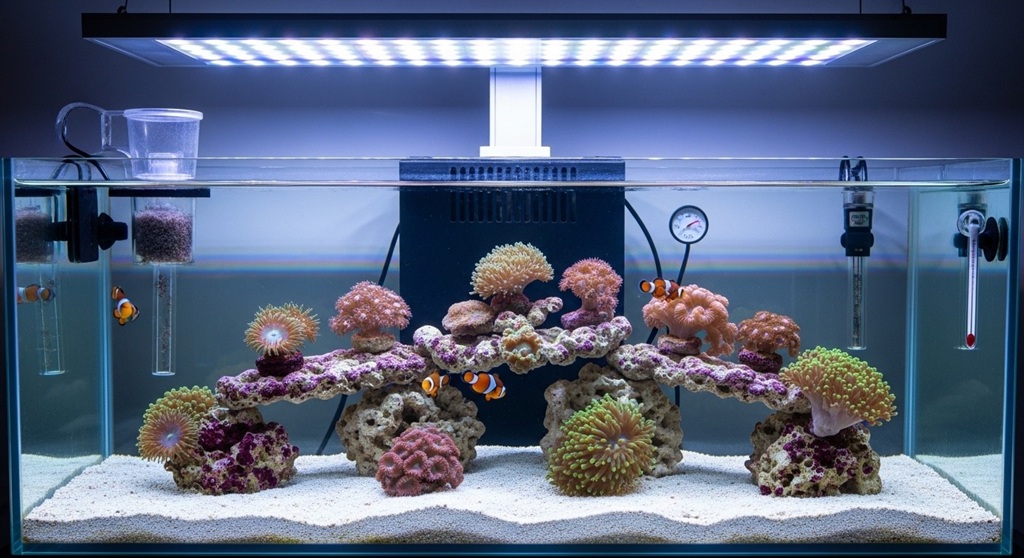
How Do You Set Up a Reef Tank Step-by-Step?
Quick answer: Setting up a reef tank involves installing equipment, adding substrate and rock, filling with saltwater, cycling the tank, and introducing livestock gradually.
Step 1: Position the Aquarium
Place the aquarium on a stable stand away from direct sunlight. Sunlight can cause algae growth and temperature fluctuations.
Step 2: Install Filtration and Equipment
Attach the protein skimmer, heater, and return pump. Install powerheads inside the tank to create strong water flow.
Step 3: Add Substrate
Add aragonite sand to the bottom of the tank. This substrate buffers pH and supports beneficial bacteria.
Step 4: Place Live Rock
Live rock acts as the biological filter of a reef aquarium. Arrange rocks to create caves and open swimming areas.
Step 5: Fill the Tank With Saltwater
Slowly pour prepared saltwater into the tank to avoid disturbing the sand bed.
Step 6: Turn On Equipment
Activate the heater, pumps, filtration system, and lighting.
Step 7: Start the Nitrogen Cycle
Before adding fish or coral, the tank must cycle.
The nitrogen cycle allows beneficial bacteria to convert toxic ammonia into nitrate.
This process typically takes 3–5 weeks.
How Do You Cycle a Reef Tank Properly?
Quick answer: A reef tank is cycled by allowing beneficial bacteria to grow and convert ammonia into nitrite and nitrate.
The nitrogen cycle follows three stages:
- Ammonia production from waste
- Nitrite formation by bacteria
- Nitrate conversion
During cycling, test water parameters every few days.
Target Water Parameters
| Parameter | Ideal Range |
|---|---|
| Temperature | 24–26°C |
| Salinity | 1.024–1.026 |
| pH | 8.1–8.4 |
| Nitrate | Below 10 ppm |
Once ammonia and nitrite reach zero, the tank is ready for livestock.
What Fish and Corals Are Best for Beginner Reef Tanks?
Quick answer: Hardy fish and soft corals are ideal for beginners because they tolerate small water parameter fluctuations.
Beginner Reef Fish
- Clownfish
- Royal gramma
- Firefish
- Yellow watchman goby
Beginner Corals
- Zoanthids
- Mushroom corals
- Green star polyps
- Leather corals
These species require moderate lighting and adapt well to new aquariums.
Add livestock slowly to avoid sudden biological load increases.
What Maintenance Does a Reef Tank Require?
Quick answer: Reef tanks require weekly water testing, regular water changes, algae control, and equipment cleaning.
Weekly Reef Tank Maintenance Checklist
- Test water parameters
- Clean algae from glass
- Perform 10–15% water change
- Check salinity levels
- Inspect equipment
Consistent maintenance prevents nutrient buildup and keeps coral healthy.
Most successful reef aquarists spend about 30 minutes per week maintaining their aquarium.
What Are the Most Common Beginner Reef Tank Mistakes?
Quick answer: The most common mistakes include adding fish too early, using tap water, overfeeding, and skipping water tests.
Common Beginner Errors
- Skipping the nitrogen cycle
- Adding too many fish at once
- Buying incompatible coral species
- Ignoring water chemistry
- Overusing aquarium lighting
A case study published by ReefBuilders analyzed over 500 beginner reef tanks. Tanks that followed slow livestock introduction and consistent water testing had a 70% higher coral survival rate during the first year.
This highlights the importance of patience and proper reef tank setup.
Conclusion: Is Setting Up a Reef Tank Worth It?
Setting up a beginner reef tank may seem complicated at first, but the process becomes manageable when broken into clear steps. The key principles remain simple: stable water parameters, reliable equipment, and patience during the cycling phase.
By following the steps in this guide—choosing the right tank size, using a proper reef tank equipment list, preparing saltwater correctly, and introducing livestock gradually—you create a stable marine ecosystem that can thrive for years.
Many aquarists report that maintaining a reef aquarium becomes easier after the first few months once the biological system stabilizes.
The reward is significant. A healthy reef aquarium becomes a living display of coral growth, fish behavior, and natural marine interactions inside your home.
If you are considering starting your first reef tank, begin with quality equipment, follow proven saltwater aquarium basics, and take the process step by step.
Ready to start your reef aquarium journey?
Create your reef tank equipment checklist, plan your setup carefully, and begin building your own thriving coral ecosystem today.
Frequently Asked Questions
How long does it take to set up a reef tank?
Setting up the physical aquarium takes a few hours, but the nitrogen cycle typically requires 3–5 weeks before fish and coral can be safely added.
How much does a beginner reef tank cost?
A beginner reef tank setup typically costs between $400 and $1,000 depending on tank size, lighting, and filtration equipment.
Do reef tanks require special lighting?
Yes. Corals rely on photosynthesis from symbiotic algae called zooxanthellae, so reef tanks require specialized LED reef lighting that mimics natural ocean sunlight.
Can beginners keep coral successfully?
Yes. Many soft corals such as mushrooms and zoanthids are beginner-friendly and tolerate moderate water parameter changes.
How often should reef tanks be cleaned?
Basic maintenance such as algae cleaning and water testing should occur weekly, while deeper equipment cleaning is usually performed monthly.
Is a protein skimmer necessary for a reef tank?
While not always mandatory for small aquariums, protein skimmers significantly improve water quality by removing organic waste before it decomposes.
What salinity level is best for reef tanks?
The recommended salinity range for reef aquariums is 1.024–1.026 specific gravity, which closely matches natural seawater.
Don’t Miss These Articles: How to Buy Great Toddler Gifts on a Budget
Up Next: How to Choose the Best Luggage for Travel in 2026 (Complete Buying Guide)




Leave a Reply