
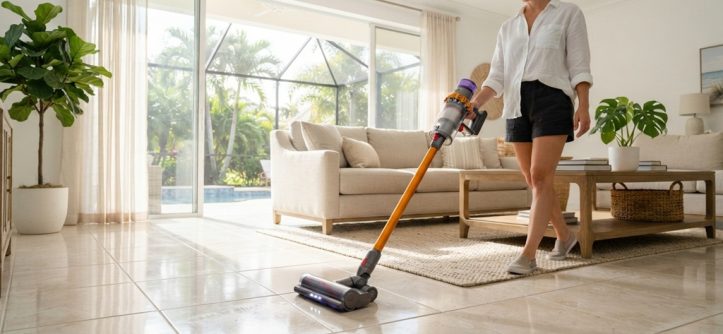
Living in Florida comes with its own set of cleaning challenges. Between the fine sugar sand that seems to appear out of nowhere, the humidity that makes dust cling to every surface, and the year-round battle against pet hair and pollen, your vacuum has to work harder than it would in most other states. If you are shopping for a new cleaning tool, you have likely noticed that the market is flooded with cordless stick models. The problem is that not all of them are suited for the specific demands of a Florida lifestyle. This guide breaks down exactly what you need to look for when comparing stick vacuums for Florida homes, helping you avoid wasting money on a machine that will frustrate you within a month.
Why Florida Homes Have Unique Vacuuming Needs
Before diving into specific features, it is important to understand why your location matters so much. A vacuum that works perfectly in a dry, arid climate like Arizona might struggle significantly in the humid, sandy environment of Florida. The combination of environmental factors changes how dirt behaves and how your machine needs to handle it.
The Sand Problem
Florida sand is notoriously fine and heavy. Unlike regular dust or dirt, this sand sinks deep into carpet fibers and settles into the crevices of hard floors. A standard vacuum with weak suction will simply push the sand around rather than picking it up. You need a machine with strong, consistent airflow and a well-sealed floor head to prevent sand from being flicked back onto the floor as you clean.
Humidity and Clumping
High humidity means that dust and debris often clump together. This is especially true in kitchens and entryways where moisture is tracked in from outside. Clumped dirt can clog the narrow pathways of a stick vacuum quickly. Look for models with wider hoses or self-cleaning brush rolls that can handle slightly damp debris without tangling or jamming.
Year-Round Allergens
Florida’s warm climate means windows are open more often, and pollen counts are high for most of the year. If you suffer from allergies, the filtration system of your vacuum is just as important as its suction power. A machine with a poor filter will release fine particles back into the air, making your sneezing and coughing worse every time you clean.
Key Features to Prioritize for Florida Conditions
When you start comparing models, you will see a lot of marketing jargon about “cyclonic suction” and “multi-surface cleaning.” While these terms sound impressive, you need to focus on specific, measurable features that directly address the challenges mentioned above.
Battery Life and Charging Time
Battery life is the most critical specification for any cordless vacuum. In a larger Florida home, you might need to clean multiple rooms in one session. Look for a model that offers at least 40 minutes of runtime on a standard mode. However, be aware that “turbo” or “max” modes will drain the battery in half that time. Consider whether the battery is removable. Having a spare battery that you can swap out instantly is far more practical than waiting for the vacuum to recharge for four hours.
Suction Power and Motor Design
Suction is measured in Air Watts (AW), not just volts. A higher Air Watt rating generally indicates better cleaning performance. For Florida homes with a mix of tile and area rugs, you want a vacuum with at least 100 AW. More importantly, look for a model with a direct-drive motor that powers the brush roll. This ensures that the brush roll spins effectively even when you are pushing it through thick sand or over high-pile rug edges.
Floor Head Versatility
The design of the floor head makes a huge difference. A soft roller head is excellent for hard floors because it picks up fine sand without scattering it. However, you also need a brush roll that can agitate carpet fibers. Many modern stick vacuums feature a dual-roller system or a single roller that works well on both surfaces. Check if the vacuum has a setting to turn off the brush roll entirely for delicate hard floors or to prevent sand from being thrown around.
Filtration System Quality
Do not overlook the filter. A HEPA filter is essential for trapping allergens like pollen and dust mites. However, a HEPA filter is only useful if the vacuum is fully sealed. If air leaks out of the body of the vacuum before it passes through the filter, you are still breathing in allergens. Look for models that explicitly state they have a “sealed system” or “whole-machine HEPA filtration.”
Weight and Maneuverability Considerations
One of the main reasons people choose a stick vacuum is for the convenience and ease of use. However, a heavy stick vacuum defeats that purpose. You will be carrying this machine up and down stairs, reaching under furniture, and maneuvering around tight corners in bathrooms and laundry rooms.
Where the Weight is Distributed
Look at where the motor and battery are located. A vacuum with the motor near the bottom (at the floor head) is easier to push and pull because the weight is closer to the ground. A vacuum with a top-heavy design will strain your wrist and arm, especially when cleaning under sofas or beds. When you pick up a vacuum in the store, hold it by the handle and extend your arm as if you were cleaning a ceiling corner. If it feels unbalanced or heavy, it will be uncomfortable to use daily.
Handle and Grip Design
When evaluating handle ergonomics to prevent hand fatigue, opt for models with a continuous toggle switch rather than a trigger-hold design, ensuring seamless cleaning across large spaces while keeping your overall home improvement expenses optimized much like understanding how sheet metal fabrication costs explained can streamline your custom renovation budgets.
Comparing Maintenance Requirements
All vacuums require some maintenance, but the frequency and difficulty of that maintenance varies significantly between models. In Florida, the sand and humidity will accelerate wear and tear, so you need a vacuum that is easy to take apart and clean.
Brush Roll Hair Tangling
If you have pets or long hair, brush roll tangling is a major annoyance. Look for models with “anti-tangle” brush rolls that are designed to push hair into the dustbin rather than wrapping it around the roller. If the brush roll does tangle, check how easy it is to remove. Some models require a screwdriver and a lot of patience, while others have a quick-release mechanism that allows you to pop the roller out and cut away the hair in seconds.
Dustbin Emptying and Cleaning
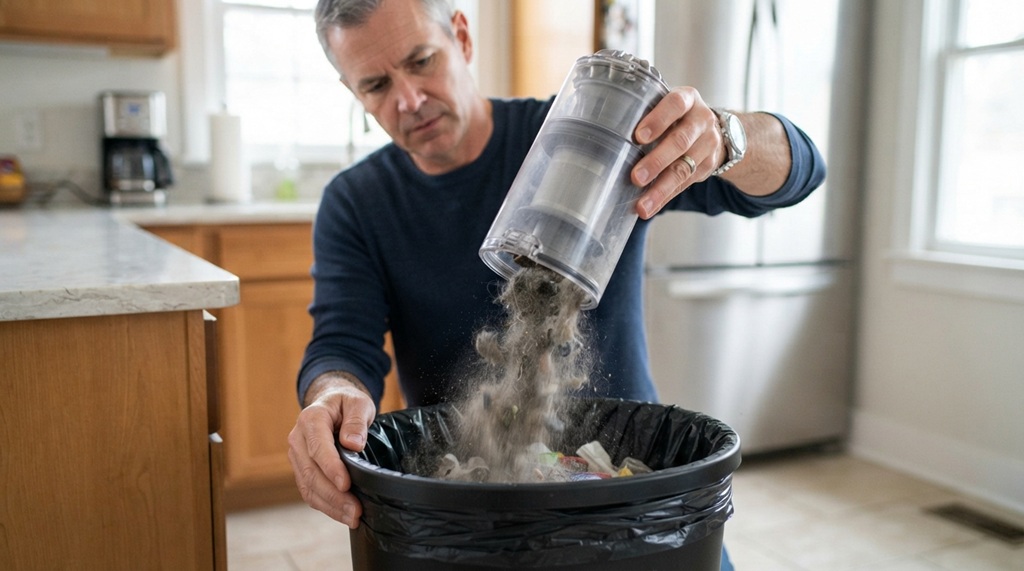
Sand is heavy and can compact at the bottom of the dustbin. A dustbin that is difficult to empty will lead to a mess every time you try to dispose of the debris. Look for a vacuum with a bottom-release dustbin that empties directly into the trash can without you having to touch the dirt. Also, check if the dustbin and filters are washable. Being able to rinse them out under the tap is crucial for removing stuck-on sand and preventing odors from developing in the humid Florida air.
Hardwood, Tile, and Area Rugs: Matching the Tool to the Floor
Most Florida homes feature a combination of tile, hardwood, and area rugs. You need a vacuum that transitions seamlessly between these surfaces without requiring you to stop and change attachments constantly.
Hard Floor Performance
For tile and hardwood, the vacuum should have a soft brush roll or a hard floor mode. The brush roll should not be too aggressive, or it might scratch delicate surfaces. The vacuum should also have good edge cleaning capabilities to pick up sand that accumulates along baseboards and in corners.
Area Rug Performance
Area rugs are common in Florida living rooms. The vacuum needs enough suction to pull dirt out of the rug fibers, but it also needs to be able to glide over the edges of the rug without getting stuck. A vacuum with a self-adjusting floor head that automatically seals to the surface is ideal. This prevents the vacuum from losing suction when moving from a hard floor to a rug and back again.
Battery Technology and Long-Term Costs
Battery replacement is an inevitable cost of owning a cordless vacuum. The type of battery used affects both the performance and the long-term cost of ownership.
Lithium-Ion vs. Nickel-Metal Hydride
All modern stick vacuums use Lithium-Ion batteries because they are lighter and hold a charge longer. However, the quality of the battery cells matters. Cheaper batteries may degrade faster, losing their maximum runtime after just a year of use. Look for a vacuum from a reputable brand that offers a warranty on the battery. Check the price of a replacement battery before you buy the vacuum. If a replacement battery costs half as much as a new vacuum, it might be more economical to buy a new machine when the battery dies.
Charging Habits
How you charge the vacuum also affects battery lifespan. Leaving the vacuum on the charging dock 24/7 can degrade the battery over time. Some modern vacuums have smart charging technology that stops charging when the battery is full. If you are not going to use the vacuum for a few weeks, it is best to store it with a partial charge rather than a full one.
Frequently Asked Questions
Are cordless stick vacuums powerful enough for thick carpets?
Most cordless stick vacuums are designed for low-pile carpets and area rugs. If you have thick, plush carpeting throughout your home, a corded upright vacuum will generally provide more consistent power. However, high-end cordless models with powerful motors can handle medium-pile carpets effectively, especially if they have a direct-drive brush roll.
How often should I clean the filter on my stick vacuum?
You should check the filter once a month. If you vacuum up a lot of fine sand, you may need to rinse the filter more frequently. Washable filters should be rinsed with water and left to air dry completely for at least 24 hours before putting them back in the vacuum. A clogged filter significantly reduces suction power.
Can I use a stick vacuum to clean ceiling fans and high corners?
Yes, most stick vacuums convert into a handheld unit with an extension wand. This makes them very effective for cleaning ceiling fan blades, crown molding, and cobwebs in high corners. Just be careful not to knock the dust loose and let it fall onto the floor, as you will need to vacuum the floor again afterward.
Is it worth buying a more expensive stick vacuum?
More expensive models typically offer better build quality, stronger suction, longer battery life, and superior filtration. They also tend to have better warranties and more readily available replacement parts. If you plan to use the vacuum as your primary cleaning tool, investing in a higher-end model is usually worth the extra cost. Cheaper models are fine for quick pickups but often lack the power and durability for whole-home cleaning.
How do I prevent sand from damaging my vacuum?
Sand is abrasive and can wear down the brush roll and internal components over time. To minimize damage, always empty the dustbin before it gets too full, as a full bin reduces airflow and forces the motor to work harder. Also, avoid vacuuming up large amounts of wet sand, as this can clog the filters and create a paste that is difficult to remove.
Conclusion
Choosing the right stick vacuum for a Florida home comes down to understanding your specific environment. Prioritize models with strong suction measured in Air Watts, a sealed HEPA filtration system to combat allergens, and a battery design that suits the size of your home. Pay close attention to the floor head design to ensure it handles both fine sand on hard floors and transitions smoothly onto area rugs. Remember that maintenance is a key factor; a vacuum that is easy to disassemble and clean will last longer and perform better in the humid, sandy conditions. By focusing on these practical criteria rather than just the flashiest marketing features, you can find a reliable cleaning partner that keeps your home comfortable and sand-free all year long.


Leave a Reply