
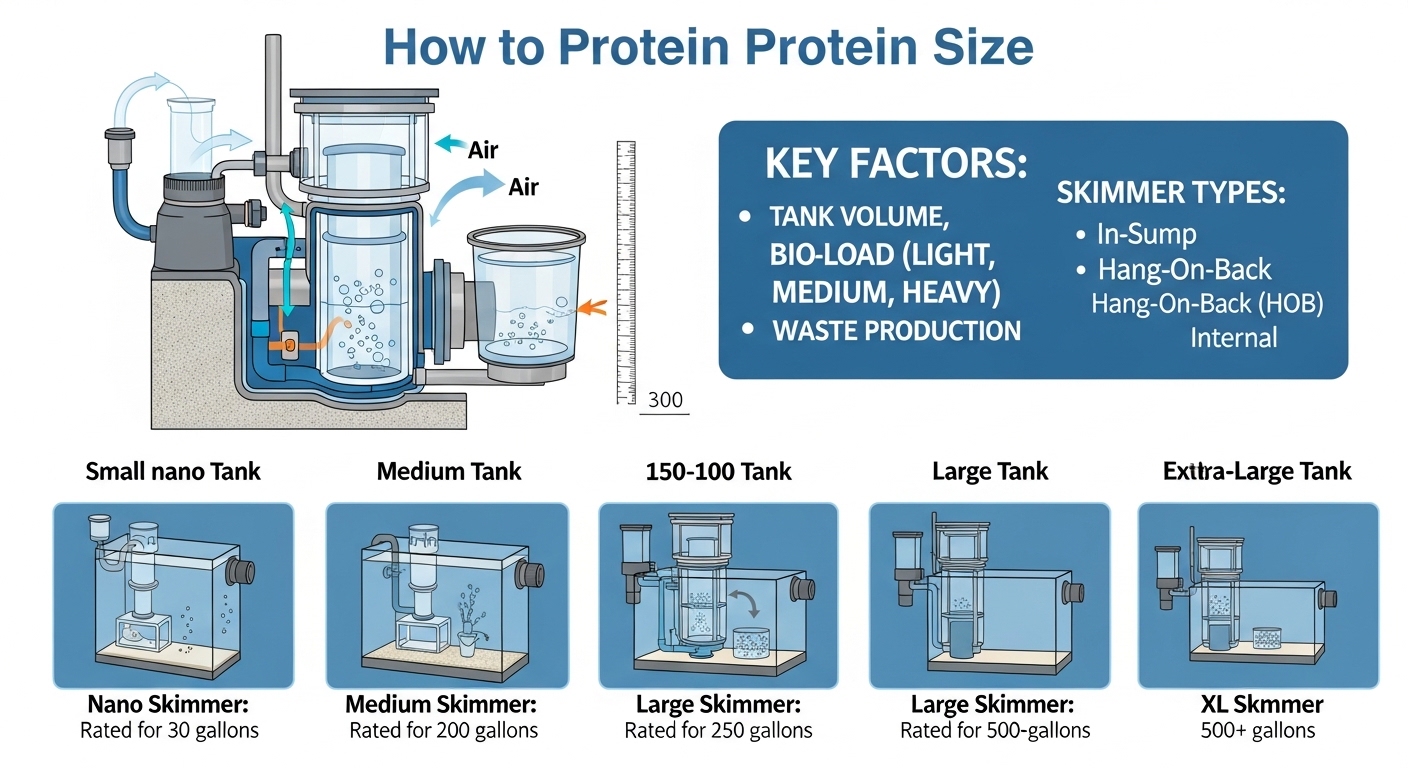
Choosing the right protein skimmer is critical for a healthy, thriving reef tank. Oversized or undersized skimmers lead to problems: dirty water, stressed corals, wasted energy, and empty wallets. But sizing a protein skimmer isn’t as simple as reading a box label. It requires careful consideration of your tank’s unique needs and biology. Here’s a complete guide on how to size protein skimmer for your setup—so you can keep your aquatic life sparkling and your hobby enjoyable.
Snippet Answer: To size a protein skimmer correctly, match its rated tank volume with your aquarium’s real water volume, consider your bio-load, and choose a model with features suited for your setup. Oversizing by 1.5x is ideal for high-stocked reef tanks; for light stocking, equal capacity is sufficient.
What Factors Determine the Right Protein Skimmer Size?
The correct protein skimmer size is influenced by the actual water volume, aquarium bio-load, sump space, skimmer design, and type of livestock. All must be considered for peak performance and water clarity.
Many aquarists make the mistake of choosing a skimmer based solely on the manufacturer’s rated gallons. However, these ratings may be optimistic or based on lightly stocked tanks. Always calculate your aquarium’s real water volume—subtracting rocks, sand, and equipment displacement.
- Bio-load: More fish and feeding mean more waste, requiring a more powerful skimmer.
- Sump space: Ensure your chosen model fits comfortably and maintains the ideal water level.
- Skimmer design: Some are more efficient due to better pumps and contact time.
- Type of livestock: Coral-heavy tanks need more intense skimming than fish-only systems.
How Does Tank Volume Impact Skimmer Selection?
Tank volume is the key starting point for sizing a protein skimmer. However, manufacturer ratings often assume light stocking and minimal feeding, so adjustments are needed.
First, calculate your display tank volume, then factor in sump space if your skimmer sits in one. Remove volumes taken up by rocks and sand to estimate net water volume. If you overstock or feed heavily, size up. Most experts recommend matching or slightly exceeding (1.2x–1.5x) your net volume for best results.
- Calculate true tank volume (subtract rocks, sand).
- Review skimmer manufacturer’s guidelines as a starting point.
- Consider upsizing if your tank is densely stocked or heavily fed.
Why Is Bio-Load Crucial in Protein Skimmer Sizing?
Bio-load reflects the amount of waste your tank generates. Higher bio-loads need stronger, larger skimmers for effective removal of organic compounds and pollutants.
A lightly stocked tank with few fish and minimal feeding will do fine with a skimmer sized equal to its water volume. For tanks teeming with fish or active corals that require heavy feeding, your bio-load increases. Here, you should size up to a 1.5x–2x rated skimmer capacity. This ensures the unit can keep up with the increased load, maintaining top water quality and minimizing nuisance algae.
- Low bio-load: Match skimmer size to tank volume (1:1 ratio).
- Medium bio-load: Go up to 1.2–1.5x tank volume.
- High bio-load: Consider 1.5–2x skimmer rating.
Not sizing correctly for your bio-load leads to skimmate build-up, toxins, and stressed livestock.
What Happens If You Oversize or Undersize Your Protein Skimmer?
Undersizing leads to dirty water, algae, and stressed animals. Oversizing can cause under-skimming, nutrient stripping, and wasted electricity. Proper sizing achieves a balance between performance and efficiency.
If your protein skimmer is too small, it cannot process all the dissolved organics and waste. This results in increased nitrates, cloudy water, and stressed corals or fish. On the other hand, an oversized skimmer may process water too quickly, removing beneficial nutrients and stressing corals that need low levels of dissolved organics. Also, oversized models may not foam consistently in lightly stocked systems, reducing efficiency.
| Problem | Undersized Skimmer | Oversized Skimmer |
|---|---|---|
| Water Clarity | Poor | Excellent, but may over-strip nutrients |
| Bio-load Management | Ineffective, toxins build up | May exceed biofiltration need |
| Energy Use | Efficient (if sized right) | Inefficient, costlier to run |
| Foam Consistency | Constant wet/dry skimmate | May not produce foam in low load |
| Livestock Health | At risk, toxic environment | Possible nutrient starvation |
How Do Different Protein Skimmer Types Affect Sizing?
Different skimmer types—internal, external, hang-on-back—affect sizing based on design and efficiency. Internal sump skimmers generally offer the most flexibility and capacity for large reef tanks.
Hang-on-back protein skimmers are limited by size and are better for nano or small tanks. External skimmers, often used in large setups, feature higher flow rates and bigger bodies. Internal in-sump skimmers are versatile, fitting most home tanks and benefiting from adjustable water height and greater contact time. Consider your available space, tank plumbing, and maintenance preferences. Sizing recommendations from manufacturers vary—always cross-check actual performance reviews.
- Internal skimmers: Most efficient and suitable for large tanks.
- External skimmers: Ideal for very large or custom systems.
- Hang-on-back (HOB) skimmers: Compact, for nano tanks.
What Are the Key Features to Look for in a Protein Skimmer?
When sizing a protein skimmer, look for features like air draw, bubble plate design, pump quality, ease of cleaning, and capacity adjustability. These determine efficiency beyond simple size ratings.
The air intake (L/hr) directly correlates with waste removal capability. Bubble plate and diffuser technology optimize foam production, increasing contact between water and air. Reliable, energy-efficient pumps ensure consistent performance, while easy-to-clean cups and bodies reduce maintenance hassle.
- Check the air draw and pump specs—higher is usually better, but match to bio-load.
- Look for removable collection cups and user-friendly disassembly.
- Choose adjustable models to fine-tune skim rate as stocking changes.
Always invest in trusted brands with strong reviews and customer support.
How Do You Maintain an Optimally Sized Protein Skimmer?
Maintaining an optimally sized skimmer involves regular cleaning, tuning water height, checking pump function, and adjusting to livestock changes. Proper maintenance ensures strong and stable performance.
Even with the right size, a neglected skimmer underperforms. Clean the collection cup weekly and the skimmer body monthly. Monitor for consistent foam production and adjust water depth within the manufacturer’s recommended range. Replace worn pumps or impellers. Reassess your skimmer if you add more livestock or change feeding habits. Proper maintenance maximizes a skimmer’s lifespan and keeps your reef tank pristine.
- Clean collection cup weekly
- Inspect & clean the body monthly
- Check pump and venturi for blockages
- Retune after stocking changes
Can You Upgrade Your Skimmer As Your Reef Tank Grows?
Yes, you can and should upgrade your protein skimmer as your reef tank population increases or your system expands. Sizing up prevents water quality issues in maturing, heavily stocked tanks.
Reef tanks often grow over time. Adding more fish, corals, or moving to a larger tank increases the bio-load and water volume. Your once-properly sized skimmer may quickly become insufficient. Plan ahead: when restocking, calculate if your skimmer still matches updated needs. Upgrading early keeps water clarity high and helps avoid nuisance algae or livestock stress. Modular sump designs make changing skimmers easier, so plan your equipment for flexibility.
What’s the Ideal Process for Sizing a Protein Skimmer?
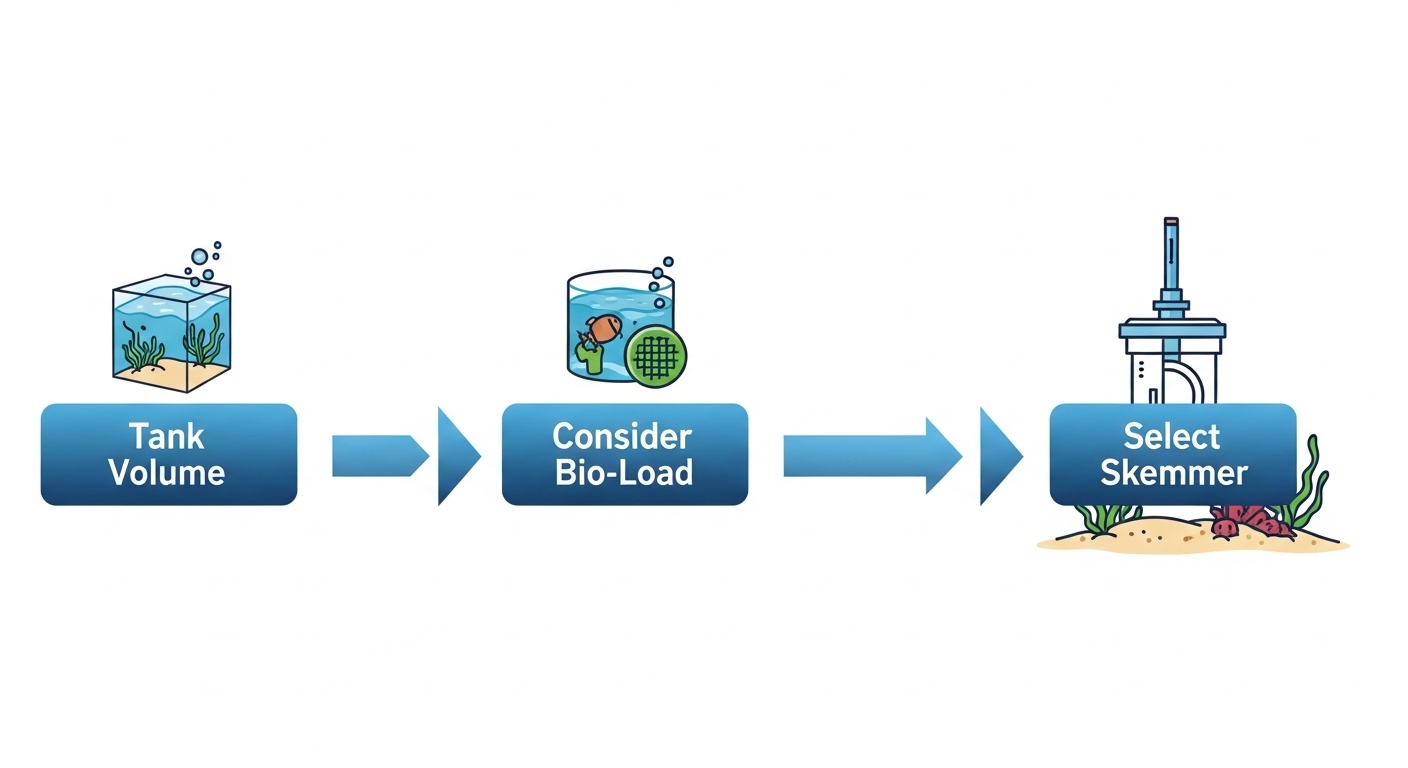
The best approach for how to size protein skimmer is to start with your net tank volume, assess the bio-load, consider stocking plans, and match these to reliable product specs and reviews.
Here’s the recommended step-by-step process:
- Calculate net water volume (subtract rock, sand, equipment displacement).
- Evaluate current and future bio-load.
- Choose the right skimmer type for your system (internal, external, HOB).
- Add 20–50% buffer to tank volume if moderately to heavily stocked.
- Check manufacturer specifications, but read verified reviews.
- Ensure the chosen model fits your sump, has a quality pump, and is adjustable.
- Install, adjust, and maintain your skimmer regularly.
Careful planning means years of crystal-clear water for your reef.
Which Top Protein Skimmers Are Best for Correct Sizing?
Top skimmer brands include Reef Octopus, Bubble Magus, Nyos, and AquaMaxx. These offer clear sizing guides, strong performance, and reliability for different tank sizes and bio-loads.
Consult the table below for a quick comparison:
| Brand/Model | Recommended Tank Size | Air Draw (L/hr) | Best For |
|---|---|---|---|
| Reef Octopus Classic 110-INT | Up to 100 gallons | 420 | Medium bio-load, beginners |
| Bubble Magus Curve 5 | Up to 140 gallons | 600 | Mixed reefs |
| Nyos Quantum 120 | Up to 120 gallons | 500 | SPS/LPS corals |
| AquaMaxx ConeS CO-1 | Up to 175 gallons | 650 | Heavy-stocked tanks |
How to Size Protein Skimmer: Step-by-Step Checklist
Use this quick checklist to ensure your protein skimmer is perfectly matched to your tank’s needs. Following each point helps achieve optimal reef tank health and clarity.
- Calculate true aquarium water volume, subtracting displacement.
- Assess your fish and coral stocking—plan for growth.
- Choose a skimmer with air draw and rating that matches or slightly exceeds your needs.
- Double-check physical sump or tank fit before buying.
- Check for ease of cleaning and pump quality.
- Read verified, recent user reviews on performance with similar setups.
- Tune regularly as your tank matures.
Conclusion: Get Crystal Clear Water with the Right Skimmer Size
Sizing your protein skimmer is the foundation of a thriving reef aquarium. Under- or oversized skimmers invite problems—from murky water to unhealthy livestock. By understanding your tank’s true volume, bio-load, and future growth, you can select a skimmer that delivers cleanliness and stability. Prioritize quality, match your skimmer to real-world needs, and maintain it diligently.
Don’t leave your reef’s health to chance. Review your setup, follow the sizing process, and invest in a skimmer built for your reef’s journey. Your corals and fish will thank you—with vibrant color and enthusiastic growth!
Ready to upgrade your reef tank’s filtration? Explore top-rated protein skimmers today and give your aquatic world the clarity it deserves!
Frequently Asked Questions (FAQ) on How to Size Protein Skimmer
How do I calculate my aquarium’s real water volume?
Measure your tank’s dimensions (length x width x height), convert to gallons or liters, then subtract the estimated displacement for rocks, sand, and decor—usually 10-20%. This gives you the net water volume to use for skimmer sizing.
Should I use the display tank size or total system volume for skimmer sizing?
For the most accurate sizing, base your calculation on the total system water volume, including the sump but subtracting displacement from all equipment and media. This ensures your skimmer handles the full flow and waste load.
Is it possible to overskim my reef tank?
Yes, running an oversized protein skimmer can strip beneficial nutrients, leading to pale or starving corals. Match your skimmer’s capacity to your bio-load and only oversize (1.5x max) for very high-stocked tanks.
Can I use two smaller skimmers instead of one large one?
Yes, running two appropriately-sized skimmers can offer redundancy and flexibility, especially in large or uniquely shaped systems. However, it may require more space and extra maintenance.
What if my protein skimmer isn’t making foam?
Check the water level, clean pumps and air intakes, adjust the water outlet, and confirm bio-load. Oversized skimmers in lightly stocked tanks may not foam well. Proper maintenance and sizing are key to consistent foam production.
How often should I clean my protein skimmer?
Clean the collection cup weekly, and soak and wipe down the main skimmer body monthly. Clean pumps and impellers every 2–3 months for optimal operation. More frequent cleaning might be needed for heavy bio-loads.
Do all coral reef tanks need a protein skimmer?
While not absolutely essential, protein skimmers are highly recommended for reef tanks to remove dissolved organics, enhance oxygenation, and stabilize water parameters. Smaller, lightly stocked tanks with diligent water changes may forgo a skimmer, but most benefit from one.
Read More Also: How to Buy a Surfing Rash Guard: Complete Beginner-Friendly Guide
Find out: How to Use a Nursing Pillow for Safe and Easy Feeding




Leave a Reply