
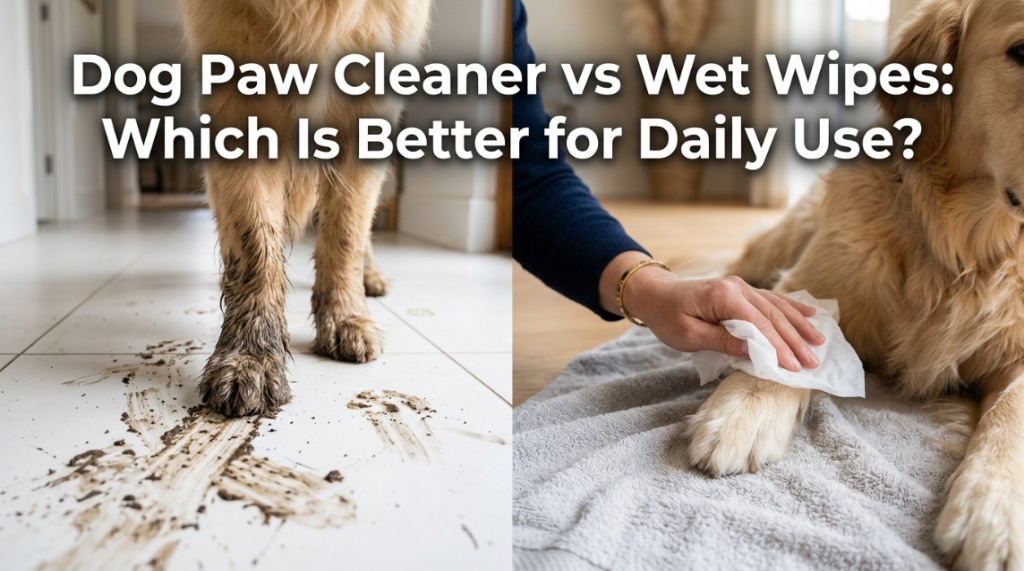
A veterinary dermatologist once told me that she sees more paw irritation cases from daily wet wipe use than from dogs who never get their paws cleaned at all — the chemicals in most wipes slowly strip the protective lipid barrier that keeps paw pads healthy. That statement flipped everything I thought I knew about convenient dog paw cleaner options. The daily paw cleaning debate comes down to two popular choices: dedicated paw cleaner devices (cups, mats, stations) that use water and gentle agitation, versus disposable wet wipes marketed for quick convenience. For dog paw care that you perform every single day — sometimes twice — the choice matters more than most owners realize. The wrong daily habit compounds into cracked pads, yeast infections, or wasted money over months. This comparison examines effectiveness, skin safety, cost, environmental impact, and real-world convenience to determine which option genuinely serves your dog better for everyday use.
What Is a Dog Paw Cleaner and How Does It Work?
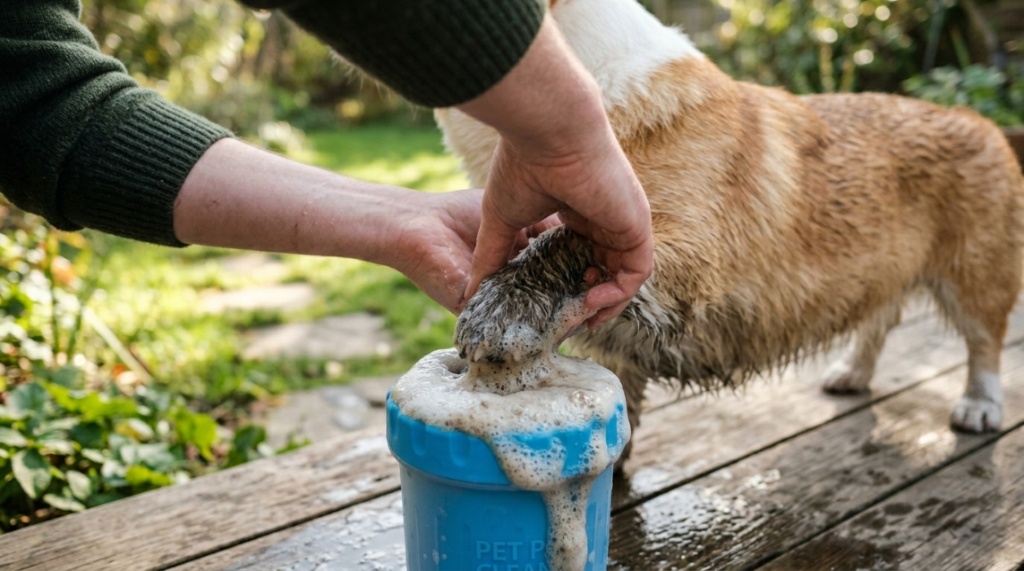
A dog paw cleaner is a water-based cleaning device — typically a cup with internal silicone bristles — that removes dirt, mud, and debris from paw pads through gentle agitation when you insert the paw and twist, using water as the primary cleaning agent.
The most common types include:
- Paw washer cups: Cylindrical containers with soft silicone bristles lining the interior. Fill with water, insert paw, twist gently, remove. The bristles reach between pads and toes.
- Paw cleaning mats: Flat silicone mats with raised bristles. Wet the mat, have your dog walk across it or rub paws on it. Best for light cleaning.
- Paw plunger style: Similar to cups but with a plunger mechanism that pushes water through bristles for deeper cleaning.
- Automatic paw washers: Battery-powered devices that spin soft bristles around the paw. Fastest but most expensive.
All paw cleaners share one principle: water does the cleaning work while bristles provide mechanical agitation to dislodge trapped debris. No chemicals required for daily mud and dirt removal. This water-first approach is what makes them fundamentally different from wipes — and fundamentally gentler on paw skin over time.
What Are Dog Paw Wipes and What Do They Contain?
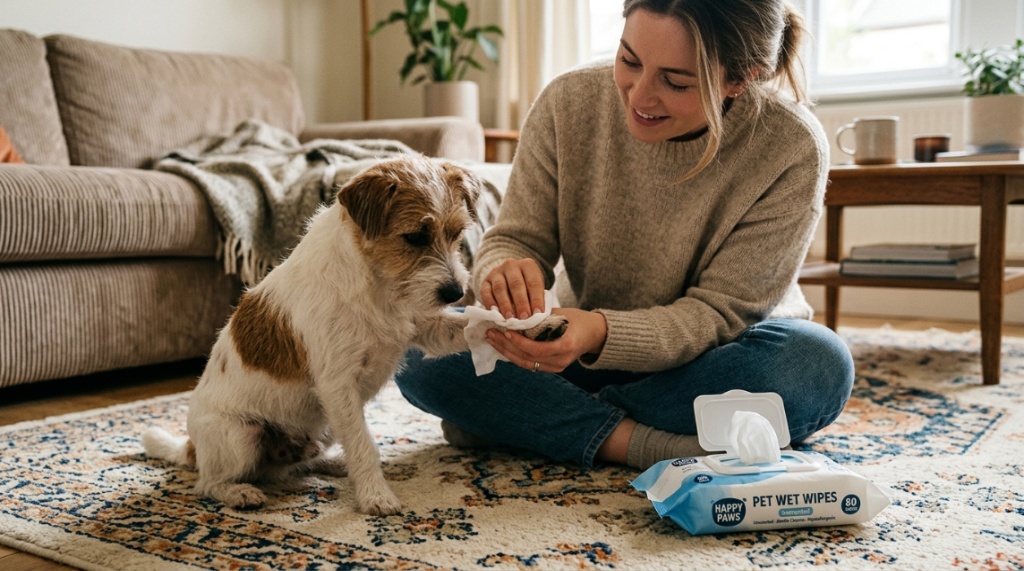
Dog paw wipes are pre-moistened disposable cloths containing water, surfactants (cleaning agents), preservatives, and often fragrances or conditioning ingredients — designed for quick single-use paw cleaning without water setup.
A typical dog paw wipe ingredient list includes:
- Water: Base liquid (60–80% of the formula)
- Surfactants: Cleaning agents that break down oils and dirt (sodium lauryl sulfate, cocamidopropyl betaine, or gentler alternatives)
- Preservatives: Prevent bacterial growth in the package (phenoxyethanol, methylisothiazolinone, or parabens)
- Humectants: Prevent the wipe from drying out (propylene glycol, glycerin)
- Fragrance: Added scent (often listed as “parfum” — a catch-all term hiding dozens of potential chemicals)
- Conditioning agents: Aloe vera, vitamin E, or oatmeal extracts for skin soothing
The concern for daily use: even “gentle” surfactants and preservatives contact your dog’s paw pads 365+ times per year. Cumulative chemical exposure at this frequency can disrupt the skin’s natural moisture barrier, leading to dryness, cracking, and increased susceptibility to infections — particularly in dogs with sensitive skin or allergies.
Which Cleans Better — Paw Cleaner or Wet Wipes?
Paw cleaners remove significantly more dirt and debris than wet wipes because water penetrates between paw pads and bristles physically dislodge compacted mud — wipes only clean surfaces they directly contact, missing the crevices where most dirt hides.
Cleaning effectiveness comparison:
| Cleaning Scenario | Paw Cleaner Effectiveness | Wet Wipe Effectiveness | Winner |
|---|---|---|---|
| Heavy mud between pads | Excellent — bristles reach all crevices | Poor — wipe cannot access between toes | Paw cleaner |
| Light surface dust | Good — works but overkill | Excellent — quick single swipe | Wet wipes |
| Sticky substances (sap, gum) | Moderate — may need soap added | Good — surfactants dissolve sticky residue | Wet wipes |
| Sand and fine grit | Excellent — water flushes particles away | Poor — wipe pushes grit around | Paw cleaner |
| Allergen removal (pollen) | Excellent — water rinses allergens completely | Good — removes surface allergens | Paw cleaner |
| Road salt (winter) | Excellent — dissolves and rinses salt away | Moderate — may not remove all salt crystals | Paw cleaner |
For daily use after typical walks involving any moisture, mud, or outdoor debris, paw cleaners deliver superior results. Wipes win only for dry-weather surface dust where a full water wash is unnecessary. The between-pad cleaning gap is the decisive factor — that is where most irritants accumulate and where wipes physically cannot reach effectively.
Which Is Safer for Your Dog’s Paw Skin With Daily Use?
Water-based paw cleaners are significantly safer for daily use because they clean without chemical exposure — wet wipes deliver surfactants, preservatives, and fragrances to paw skin 365+ times per year, which can degrade the natural skin barrier over time.
The skin safety concern is cumulative, not immediate. A single wipe use is harmless. Daily use over months creates problems:
- Lipid barrier disruption: Surfactants in wipes strip natural oils from paw pads. Daily stripping prevents the barrier from fully regenerating between cleanings.
- Contact sensitization: Repeated exposure to preservatives (especially methylisothiazolinone) can trigger allergic contact dermatitis — red, itchy, inflamed paw pads.
- pH disruption: Dog skin pH (6.2–7.4) differs from human skin. Wipes formulated for human pH ranges can disrupt canine skin flora.
- Fragrance sensitivity: Artificial fragrances are among the most common contact allergens for dogs. Daily exposure maximizes sensitization risk.
Plain water at appropriate temperature cleans effectively without any of these risks. For dogs with existing allergies, sensitive skin, or a history of paw problems, water-based cleaning is the only dermatologist-recommended daily option. For finding the right dog paw cleaner for daily use, prioritize devices with soft medical-grade silicone bristles that clean thoroughly without irritating sensitive paw pads.
How Do the Costs Compare Over a Year of Daily Use?
A paw cleaner costs $12–$25 one-time and lasts years, while daily wet wipe use costs $150–$400 per year depending on brand and dog size — making paw cleaners 10–20x more economical for daily routines.
Annual cost breakdown:
- Paw cleaner cup: $15 average purchase price + $0 ongoing cost (uses tap water). Lasts 3–5 years minimum. Annual cost: $3–$5.
- Budget wet wipes: $8 per 100-count pack. Using 2–4 wipes per day (one per paw minimum) = 730–1,460 wipes per year = $58–$117 annually.
- Premium dog paw wipes: $15 per 100-count pack. Same usage = $110–$220 annually.
- Medicated/hypoallergenic wipes: $20+ per 80-count pack. Same usage = $183–$365 annually.
Over a dog’s lifetime (10–15 years), the cost difference is staggering. A paw cleaner saves $1,500–$5,000 compared to daily wipe use. That money buys a lot of quality dog food, vet visits, or outdoor adventures.
The hidden cost of wipes also includes the environmental disposal impact — thousands of non-biodegradable wipes per dog per year entering landfills. Even “biodegradable” wipes take months to break down and often contain plastic fibers that persist indefinitely.
Which Is More Convenient for Busy Dog Owners?
Wet wipes offer slightly faster grab-and-go convenience with zero prep, but paw cleaners require only 10 seconds of pre-filling and deliver faster actual cleaning — making total time roughly equal when you factor in the multiple wipes needed per paw versus one quick cup dip.
Real-world convenience comparison:
Wet wipes convenience factors:
- No prep — grab from package and use
- Portable for travel and on-the-go use
- No water source needed
- No cleanup — dispose after use
- But: need 2–4 wipes per cleaning session (one per paw minimum)
- But: heavy mud requires 2–3 wipes per paw
Paw cleaner convenience factors:
- Requires pre-filling with water (10 seconds)
- Requires emptying and rinsing after use (15 seconds)
- Not portable without water access
- But: cleans all four paws with one fill
- But: handles heavy mud in the same time as light dirt
- But: no ongoing supply purchases needed
For home use (daily post-walk routine), a pre-staged paw cleaner by the door is equally convenient to wipes once the habit is established. For travel, car rides, and situations without water access, wipes remain the more practical portable option. Many owners keep both — paw cleaner at home, wipes in the car.
What About Environmental Impact?
Paw cleaners produce zero waste during use (only tap water), while daily wet wipe use generates 730–1,460 non-recyclable wipes per year per dog — a significant landfill contribution that most “eco-friendly” labeling does not honestly address.
Environmental reality of wet wipes:
- Most wipes contain plastic fibers (polyester, polypropylene) that never fully biodegrade
- “Biodegradable” wipes require industrial composting conditions — they do not break down in landfills
- “Flushable” wipes cause sewer blockages and should never be flushed regardless of labeling
- Manufacturing, packaging, and shipping wipes has a carbon footprint that reusable tools eliminate
A single paw cleaner cup replaces approximately 5,000–15,000 wet wipes over its lifespan. For environmentally conscious dog owners, this alone makes the decision clear. The only waste a paw cleaner generates is dirty water — which goes down the drain and through water treatment like any other household water use.
When Should You Use Wipes Instead of a Paw Cleaner?
Use wet wipes when traveling without water access, for quick allergen removal on dry days, for cleaning paws in the car between stops, and for spot-cleaning specific areas (a single dirty paw, a scrape that needs gentle cleaning) where a full wash is unnecessary.
Wipes earn their place in specific situations:
- Road trips: Quick paw wipe at rest stops without finding a water source
- Vet visits: Clean paws before entering the clinic
- Dry weather light dust: When paws are barely dirty and a full wash is overkill
- Spot cleaning: One paw stepped in something specific
- Between-pad medication application: Clean the area before applying topical treatments
- Emergency cleanup: Dog tracked mud inside before you could catch them
The ideal approach for most dog owners: paw cleaner as the daily default at home, wipes as the portable backup for situations where water is unavailable. This maximizes skin safety and cost efficiency while maintaining convenience when you need it.
Conclusion
For daily use, a dog paw cleaner wins decisively over wet wipes on cleaning effectiveness, skin safety, long-term cost, and environmental impact. Water-based cleaning removes more debris, introduces zero chemicals to paw skin, costs pennies per year versus hundreds of dollars, and produces no waste. Wet wipes retain value as a portable supplement for travel and dry-weather touch-ups — but they should not be your everyday default.
Make the switch gradually if your dog is accustomed to wipes. Introduce the paw cleaner with positive reinforcement over a week, and keep wipes available for situations where water access is impractical. Your dog’s paw health, your wallet, and the environment all benefit from this simple change in daily routine.
Which method do you currently use for daily paw cleaning? Have you noticed any difference in your dog’s paw health after switching? Share your experience below.
Frequently Asked Questions
Can I use human wet wipes on my dog’s paws?
Human wet wipes are not recommended for regular dog paw use. They often contain propylene glycol, fragrances, and preservatives formulated for human skin pH (4.5–5.5), which differs significantly from canine skin pH (6.2–7.4). Occasional emergency use is unlikely to cause harm, but daily use of human wipes increases the risk of contact dermatitis and paw pad dryness in dogs.
How often should I replace my dog paw cleaner cup?
Replace a silicone paw cleaner cup every 3–5 years, or sooner if bristles become flattened, the cup develops cracks, or you notice mold that cleaning cannot remove. Between replacements, wash the cup weekly with hot water and mild soap to prevent bacterial buildup. Most quality silicone cups maintain their bristle integrity for thousands of uses.
Do paw cleaner cups work for large breed dogs?
Yes — paw cleaner cups come in multiple sizes specifically for large breeds. Look for “large” or “XL” sizes designed for breeds like German Shepherds, Golden Retrievers, and Labrador Retrievers. The cup opening should be wide enough that the paw enters without squeezing. If your dog’s paw barely fits, size up for comfort and better cleaning access.
Are medicated paw wipes safe for daily use?
Medicated paw wipes (containing chlorhexidine, ketoconazole, or other active ingredients) should not be used daily unless prescribed by a veterinarian for a specific condition. These active ingredients are designed for treatment, not maintenance. Daily use of medicated wipes can disrupt normal skin flora and create resistant organisms. Use plain water daily and reserve medicated wipes for prescribed treatment periods.
Can I add apple cider vinegar to my paw cleaner water?
A dilute apple cider vinegar solution (1 part ACV to 10 parts water) can help with yeast-prone paws, but should not be used daily on healthy paws. The acidity can irritate intact skin with frequent use. Use plain water as your daily default and reserve ACV rinses for 2–3 times per week maximum, only if your dog has diagnosed yeast issues. Always consult your vet before starting any medicated paw soak routine.
Do paw cleaning mats work as well as paw washer cups?
Paw cleaning mats work well for light dirt and surface mud but cannot match cups for heavy mud removal. Mats clean the bottom of paw pads effectively but do not reach between toes the way a cup’s internal bristles do. For daily light maintenance in dry weather, mats are faster and easier. For rainy seasons and muddy conditions, cups provide significantly more thorough cleaning.
How do I clean my dog’s paws if they hate both wipes and paw washers?
Start desensitization training with high-value treats (cheese, chicken) and extremely brief contact — touch the paw for one second, reward immediately. Gradually increase duration over 7–10 days. If your dog tolerates standing in shallow water, a low-sided basin they walk through can work as a passive paw rinse. Some dogs accept a damp towel draped over a doormat that they walk across voluntarily. Find the method your dog tolerates and build from there.




Leave a Reply