

Traveling should feel exciting, not exhausting. However, the wrong bag can turn even a short trip into a tiring experience. A heavy, poorly designed tote drains your energy before you even reach your destination. Finding the right lightweight travel tote makes every journey smoother and more enjoyable.
This guide covers everything you need to know. From materials and features to sizing and storage, you will learn exactly what to look for before you buy.
Why Your Choice of Travel Tote Matters
Most travelers underestimate how much their bag affects their comfort. A tote that is too heavy adds strain to your shoulders and back. One that is too small forces you to pack a second bag. Additionally, a tote with poor organization leaves you digging for your passport at the worst possible moment.
The right tote works with you, not against you. It fits your essentials, stays light on your shoulder, and handles the demands of a busy travel day with ease. Therefore, taking time to choose wisely pays off on every trip you take.
Understanding What “Lightweight” Really Means
Lightweight does not simply mean small. A large tote can still be lightweight if it is made from the right materials. The weight of an empty bag matters more than people realize. If your tote already weighs two pounds before you pack anything, you are starting at a disadvantage.
As a general rule, look for totes that weigh under one pound when empty. Many well-designed travel totes today fall well below that mark. Furthermore, a lighter bag means you have more room in your luggage allowance for the things that actually matter.
Best Materials for a Lightweight Travel Tote
The fabric of your tote determines both its weight and its durability. Here are the most common materials used in travel totes today:
- Nylon: This is one of the most popular choices. It is light, strong, and resists water well. Ripstop nylon is especially tough because the weave prevents tears from spreading.
- Polyester: Slightly heavier than nylon but still very lightweight. Polyester holds its shape well and is easy to clean.
- Canvas: Natural canvas is durable but heavier. Waxed canvas offers water resistance but adds more weight. It is better suited for style than serious travel.
- Recycled fabrics: Many brands now use recycled plastic bottles to create strong, lightweight fabrics. These are eco-friendly and perform just as well as traditional synthetics.
For most travelers, nylon or recycled polyester offers the best balance of weight and durability. A durable tote made from these materials can handle years of regular travel without showing significant wear.
Key Features That Make Travel Easier
Comfortable, Adjustable Straps
Straps matter more than most people think. A thin, rigid strap digs into your shoulder quickly. Look for totes with wide, padded straps. Adjustable straps are even better because they let you find the most comfortable fit for your body.
Additionally, some totes include a back strap or luggage sleeve. This lets you slide the tote over the handle of a rolling suitcase. That simple feature keeps your hands free and reduces shoulder fatigue significantly.
Enough Pockets for Organization
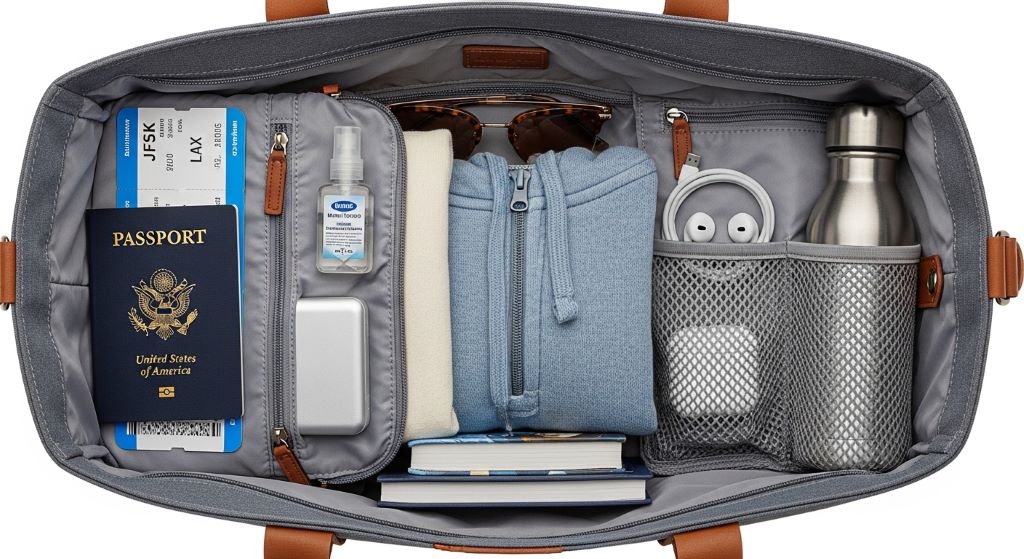
A single large compartment sounds simple, but it creates chaos when you travel. You need organized pockets for your phone, passport, boarding pass, and small essentials. Therefore, look for totes with at least two interior pockets and one exterior zip pocket.
The exterior pocket is especially useful as an airport bag. You can reach your ID and boarding pass without opening the main compartment. That small convenience saves time at every security checkpoint.
A Secure Closure
Open-top totes look stylish, but they are not ideal for travel. A zip closure keeps your belongings safe in crowded spaces. Magnetic snaps are convenient but less secure. If you travel through busy airports or cities, a zip-top tote gives you much better peace of mind.
Water Resistance
Spills happen. Sudden rain happens. A water-resistant tote protects your belongings from minor moisture without adding much weight. Look for bags with a DWR (Durable Water Repellent) coating. This finish sheds light rain and everyday spills easily.
The Right Size for a Travel Tote
Size is a personal decision, but some general guidelines help. A tote that is too small forces you to leave things behind. One that is too large becomes heavy and unwieldy in crowded spaces.
For day trips and carry-on use, a tote between 20 and 30 liters works well for most people. This range holds a change of clothes, a laptop, snacks, a water bottle, and your daily essentials without becoming bulky.
If you plan to use your tote as a personal item on flights, check your airline’s size restrictions first. Most airlines allow personal items up to about 18 by 14 by 8 inches. A well-chosen airport bag that fits these dimensions saves you the stress of gate-checking your belongings.
What to Look for in Strap and Handle Design
A good travel tote offers more than one way to carry it. Top handles make it easy to grab quickly. A shoulder strap distributes weight across your body for longer carries. Some totes even convert to a crossbody style, which is ideal for moving through busy terminals.
However, handle reinforcement matters just as much as the handles themselves. Stitching around the handles should be tight and layered. Stress points where handles meet the body of the bag are the most common failure spots. Inspect these areas carefully before buying.
Packability: The Feature Frequent Travelers Love
Many lightweight totes can fold down into a small pouch for easy storage. This is called a packable design. It is one of the most useful features for frequent travelers.
A packable tote takes up almost no space in your suitcase when not in use. When you need extra carrying capacity — for shopping, a day trip, or an overflow of souvenirs — simply unfold it and you have a full-sized bag ready to go. Therefore, a packable tote essentially gives you a backup bag for free.
Trusted Brands Worth Considering
Several brands have built strong reputations for quality lightweight travel bags. Longchamp’s Le Pliage line is one of the most recognized packable totes in the world. Baggu makes simple, strong totes from recycled nylon. Lo & Sons and Béis design totes specifically for travelers, with thoughtful pocket layouts and airline-friendly dimensions.
However, you do not need to spend a fortune. Many affordable brands produce solid, lightweight totes that perform just as well as premium options. Read user reviews carefully, especially from people who have traveled with the bag for more than six months.
How to Test a Tote Before You Buy
If possible, test the tote in person before purchasing. Load it with items similar to what you normally carry. Then walk around the store for a few minutes. Notice how it sits on your shoulder. Check if the straps dig in or slip off. Open and close every pocket to see if the zippers move smoothly.
Additionally, check the interior stitching. Pull gently at the seams to test strength. Look at how the handles are attached. These quick checks reveal a lot about the bag’s overall quality without needing to use it for years first.
How to Care for Your Tote to Make It Last
A lightweight tote can last for many years with simple care. After each trip, empty the bag completely and shake out any crumbs or debris. Wipe the interior with a damp cloth if needed.
For fabric totes, hand washing in cool water with mild soap works best. Avoid machine washing unless the manufacturer specifically allows it. Heat from dryers can damage water-resistant coatings and weaken adhesives used in construction.
Store your tote in a cool, dry place. Avoid leaving it compressed or folded in the same position for long periods, as this can create permanent creases in the fabric.
Conclusion
Finding the right lightweight travel tote takes a little thought, but the payoff is huge. Focus on materials that offer strength without weight, such as ripstop nylon or recycled polyester. Look for thoughtful features like padded straps, secure closures, and organized pockets. Choose a size that fits your airline’s personal item guidelines without sacrificing the capacity you need.
A durable tote built for travel will serve you well on countless journeys. Whether you need a reliable airport bag for rushing between gates or a packable backup for day trips, the right tote makes every step of travel more comfortable. Invest in quality, care for your bag properly, and it will be your most trusted travel companion for years to come.
Frequently Asked Questions
What is the best material for a lightweight travel tote?
Ripstop nylon and recycled polyester are the top choices. Both are light, strong, and water-resistant. They hold up well under the demands of frequent travel without adding unnecessary weight.
Can I use a travel tote as my personal item on a plane?
Yes, in most cases. However, always check your airline’s specific size rules before flying. Most totes sized between 18 and 14 inches fit comfortably under the seat in front of you.
How do I keep my tote organized while traveling?
Look for totes with multiple interior pockets. Use small packing cubes or pouches inside the main compartment to separate your items further. Keeping your most-used items in the exterior pocket also saves time at security.
Are packable totes as durable as regular totes?
Packable totes are designed to be light and foldable, so they may use thinner fabrics. However, many are still very durable. Brands that specialize in travel gear often produce packable totes that handle years of regular use without issues.
How often should I clean my travel tote?
Clean your tote after every few trips or whenever it looks dirty. A quick wipe-down with a damp cloth handles most surface dirt. Deep clean with hand washing as needed, and always let it air dry completely before storing.
Related Topics:
The Art of Packing Light: Innovative Travel Hacks for the Modern Nomad
Best Travel Clothes for Every Adventure: A Complete Guide to Comfort, Style, and Functionality



Leave a Reply