
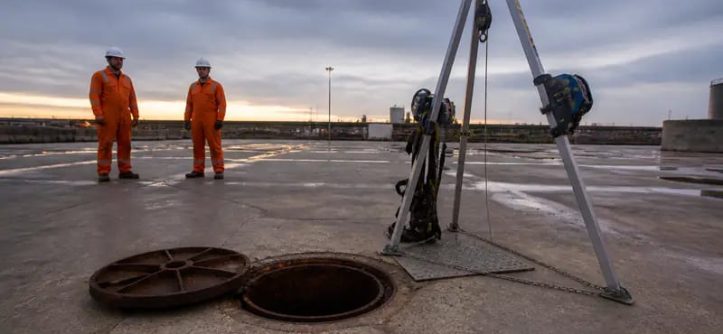
When a person enters a tank, vessel or sewer for work to be carried out, the clock starts ticking immediately for their rescue should they require it. The time taken for a rescue to arrive at the scene will have been determined by a decision made earlier for the work to be carried out.
Why Every Minute Counts
In an oxygen deficient or toxic atmosphere a person can lose consciousness within seconds or minutes and suffer irreversible harm within minutes if they are required to breathe in contaminated air. NHS first aid guidance describes how quickly a casualty’s condition can deteriorate if they are required to breathe in air that is contaminated with a harmful or noxious substance. Rescue from a confined space has to be measured in minutes and seconds not “as soon as possible”.
On-Site Team Versus 999
Your own trained and equipped confined space rescue team will generally respond within 2-3 minutes. However, in most instances where 999 are called the fire service will take significantly longer to respond after the call has been answered. This must be compared to your own response time and considered when risk assessing confined spaces for entry.
What Actually Slows A Rescue Down
Distance to fresh air from the confined space entry point, and the shape of the access route, can have a bigger impact than expected on a confined space rescue. A confined space entry point with a narrow hatch, or long ladder, or vessel with internal baffles can take so long to set up to take a casualty out. As for equipment that has to be set up on site as opposed to already having been rigged up, this will also add up.
Benchmark Your Real Response Time
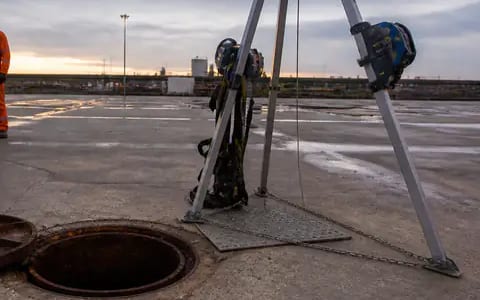
Don’t guess how long it will take your team to respond to an alarm. Time a practice entry to a confined space and log the real time it takes to respond to an emergency. Record every stage of the rescue, from the alarm being raised to the casualty being extracted from the confined space, recovered and respirator removed.
Match Provision To The Space
A small, shallow entry point with a wide hatch will require less provision for confined space rescue than a deep, narrow vessel with one small entry point.
If you want Confined Space Rescue, https://www.agofirerescue.com/confined-space-rescue/ is a good place to start.
Log It And Learn From It
As with any exercise, note down how long it took at each section of the response (alarm raised, team mobilised, casualty reached, casualty cleared etc). Then, go back through these at a later date to establish if there are any areas where significant amounts of time are being lost and what the cause of this may be.
Knowing your real numbers is key to a good rescue plan not letting you down on the day of the incident.



Leave a Reply