
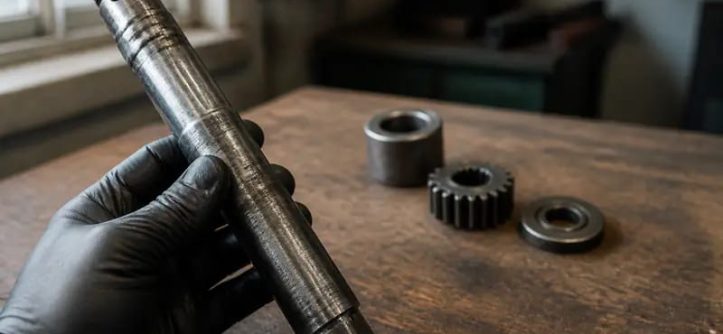
Punchline Gloucester give a good account of the wear, corrosion and friction resistance offered by coatings. But so many poor specification decisions are based on treating these three enemies as one. It’s worth reading Punchline Gloucester’s profile of Poeton’s coatings work in full.
The feature is a long article that primarily describes Poeton’s entry to the Polish market. However, the three part phrase ‘Wear, Corrosion and Friction’ is worthy of further explanation.
The feature names three problems, not one
A failure can cause wear (i.e. material removal) and/or corrosion (i.e. chemical attack), and/or excessive friction (and the associated generation of heat). In many cases the three failures will not occur to the same extent and thus each must be tackled in a different manner.
How each failure looks on a returned part
Look at the worn part, not the drawings of the part. Wear appears as bright clean areas or as scratches. Corrosion appears as pitting or as stains on the surface. Friction problems appear as heat marks or as galling (where surfaces have torn and welded together).
Matching coating families to failure modes
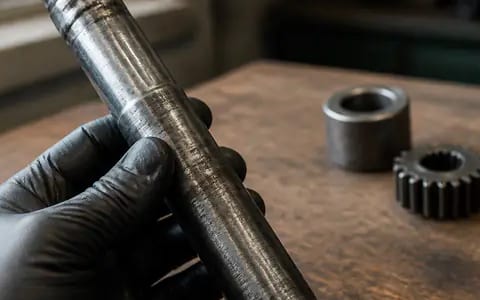
Different finishes will offer different degrees of protection to wear, corrosion and friction. Picking a finish is typically a function of matching a coating ‘family’ to a failure mode. For example, wear is typically addressed with hard chrome coatings, corrosion with cadmium or zinc nickel coatings. Both of these latter coatings are highly controlled today (e.g. hexavalent chrome is a particularly restricted substance) and so call for careful attention in design specification.
When one coating has to do two jobs
This kind of compromise between function and form can go horribly wrong though. A harder coating is often specified when the real problem is surface corrosion or inadequate surface lubrication. However a very hard coating is brittle and will crack under load if applied to a soft substrate. The cracks so produced will then rapidly corrode.
Choosing the cause before the coating
The feature is right to refer to the three features of wear, corrosion and friction/heat, and proper diagnosis comes before specifying the Electroless Nickel Coating to meet your requirements. It is generally very difficult to determine whether wear has caused corrosion or vice versa or whether galling has occurred due to a lack of lubrication. It is also generally very difficult to determine whether a surface has begun to wear due to corrosion or other failure mode(s). All such matters must be resolved by reference to test data from the relevant application (e.g. salt-spray test data and/or wear test data from a wear test rig operated under relevant service loads etc.).



Leave a Reply