
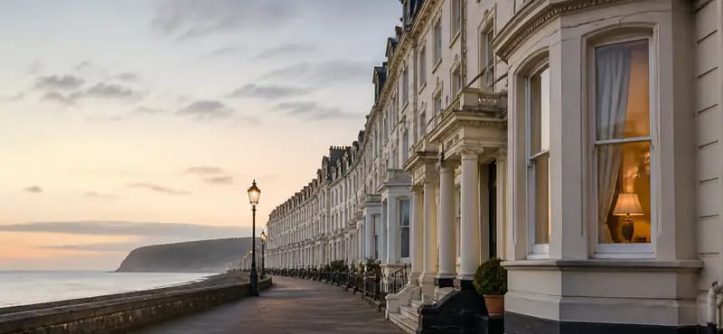
It’s worth reading Express.co.uk’s report on Llandudno’s Victorian seafront and hotels in full.
When we hear that a building is Grade II listed we often associate it with exclusivity. An awful lot of coverage of Llandudno’s Victorian seafront and hotels has appeared in Express.co.uk recently, listing off the Grade II buildings of the town.
The label is actually pretty common in Wales. A Grade II listing does not necessarily mean a building is old or special. What makes a stay in a Llandudno hotel of Grade II listed building special, even for Christmas parties in Llandudno, is whether or not it is still a lived-in building.
What the Grade II label actually tells you
When a building is listed it is because it is of special interest, either because of its architectural merits or because of its historical significance. Once a building is listed then there are matters which can not be done to the building. This does not necessarily mean that there are things that you would wish to be able to do but often it is simply that the listed building’s features are used whether you like it or not.
Roughly nine in ten Welsh listings are Grade II
Grade II’s are 91% of Wales’ 30,000 listed buildings according to the Cadw guide to listing. And Rough Guides’ Rough Insights says that in Wales Grade II listed buildings “form the vast bulk of listed buildings”. So when local 66-year-old Herry Sweeney said in the feature that Llandudno had more Grade II listed buildings than any other seaside town in Wales he was spot on – they are the ‘everyday’ listed building.
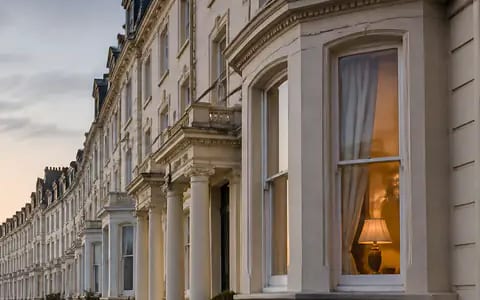
They list the facades of buildings, the ironwork, the sash windows. In fact some 400 listed buildings in Wales are made up of fabric that the listing seeks to protect. The feature itself goes on to say that most of these are exterior features of buildings.
Why Llandudno’s terraces are the real distinction
What matters more than anything is the continued existence of a batch of listed buildings amongst newer buildings. An unusual listed building amidst scores of more modern buildings is unusual. But hundreds of listed buildings stretched in a line down the middle of a Welsh seaside town’s front is something special.
Living in the building rather than looking at it
Experiencing the Victorian era from within a listed building is, for me, the key to Heritage stays. So, long as a working period building is still being used for its original purpose then it doesn’t matter a jot that it is listed. It’s a resource to use.
Judging a heritage stay for the festive season
For festive parties though look for hotels that are still working period properties. See how they have used their high ceilings and continue to serve from their original rooms. Look at how they have decorated their original staircases and used their original bay windows. Get a feel for how they will look all lit up and steamed up on a winter’s night.
What to look for in a Victorian hotel
1) Are the original features used on a daily basis? 2) Is the property within a terrace and are you able to experience the ‘street’ as part of your stay? 3) Is the property operating as hospitality? In other words, are they still taking guests for nights stay. A hotel is a heritage property if it is still being used as it was originally intended.
So look for the original rooms of a hotel and ask do they use them? This will give you an idea of whether or not you are experiencing heritage that is ‘lived in’ and that is what I mean by good quality heritage and that is what you will get at St George’s Hotel.




Leave a Reply