
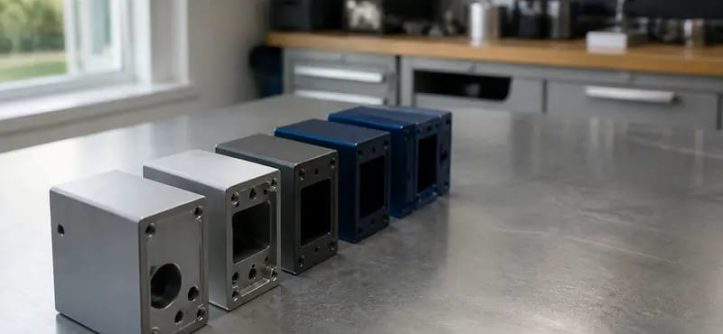
You’re choosing a finish for a run of aluminium housings, so news that the anodising plans of Poeton, a big specialist finisher of aluminium parts, have been covered by Punchline Gloucester is worth a look. It’s worth reading Punchline Gloucester’s coverage of Poeton’s new anodising plans in full.
For the majority of users, news of the 2027 plans adds useful context. What matters to them will be the decisions that affect the part on their drawing.
What the 2027 anodising plan genuinely offers
James Poeton, Managing Director of Poeton is quoted in the article as saying that “significant” anodising capacity will be introduced at the new Polish facility in 2027, alongside hard chrome, cadmium, zinc nickel and chemical conversion coatings. Aerospace and Defence customers will be relieved to know that this additional capacity will be “Nadcap approved” and that automotive will also be a market served by this new facility.
Where approvals matter and where they do not
Nadcap is the term used within the aerospace industry to refer to approval of special processes within approved aerospace organisations. For non-aerospace items this approval may not be required, so the specification can be matched to the part. Pay details are left to individual employers in England, Scotland and Wales as to whether or not they choose to advertise them in job adverts, until legislation arrives which states that they must be. That comes from GOV.UK pay transparency guidance.
Specifying the coating on real parts
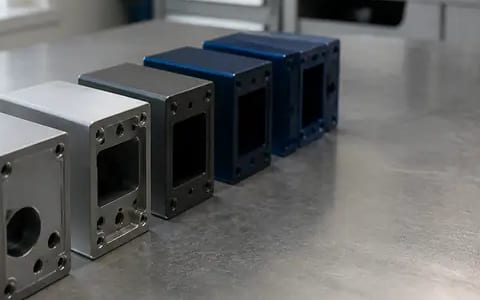
Hard anodising grows the oxide film into and out of the surface of the part. Bore diameters and mating surfaces therefore need to be dimensioned with adequate tolerance to allow for growth. In addition the alloy must be suitable for anodising. Some aluminium casting alloys do not anodise uniformly and can be soft in some areas. Therefore the alloy must be specified prior to specifying the anodizing finish and the required thickness and hardness.
Design choices that cost more than the finish
Sharp edges can need to be radiused to prevent local damage to the coating. The appearance of visible parts anodized coatings can vary between batches and alloys, so items such as housing parts made in two batches will not necessarily match. As with many aspects of finish specification, a tight tolerance or change in alloy often adds most cost of the coating process.
What a non-aerospace buyer should do first
Prioritise the key points on your housing drawing (the alloy, thickness and the tolerance allowance) and establish your evidence requirements (e.g. coating thickness and hardness on a sample part) prior to talking to suppliers.
So the plans of Poeton will be worth watching for suppliers in the aerospace chain of production. But for everyone else the terms and conditions for housing finish will be defined by your part drawing (with edges turned to sufficient radius and bores allowing for part coating growth) and a short list of questions which now will have meaning.


Leave a Reply