
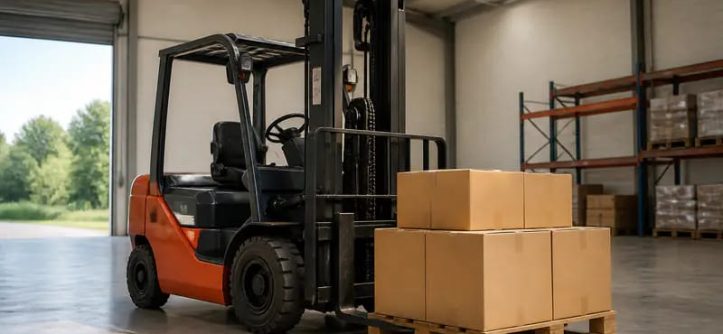
Any business using lifting equipment needs to understand the law behind LOLER Inspections.
Many small businesses that use lifting equipment have no idea that the duty to ensure lifting equipment is suitable and safe goes beyond mere maintenance of the equipment. In this article we will look at the legal requirements for the examination and testing of lifting equipment.
The Legal Basis
The Lifting Operations and Lifting Equipment Regulations 1998 (LOLER) are specific health and safety regulations which cover lifting equipment. The full regulations can be read online at the Lifting Operations and Lifting Equipment Regulations 1998. These regulations are designed to reduce the number of serious injuries and deaths caused by faulty lifting equipment. They are designed to complement other workplace health and safety legislation and fill the specific gaps that such legislation creates with respect to lifting equipment.
Who Counts As A Duty Holder
In general, the duty holder is the owner of the lifting equipment. However, in certain circumstances the owner can transfer the duty to another person or company. It could be the employer of the staff using the lifting equipment, the person controlling the use of the lifting equipment, or even a hiring company. If you have hired a forklift for a short period of time and it has broken, you may think that the hire company is responsible. However, under the terms of the hire agreement you may find that you are still the duty holder.
What Equipment The Duty Covers
A single vehicle ramp in a small garage will be subject to the same legal requirements as a large warehouse with a fleet of forklifts. Equipment covered by LOLER includes passenger and goods lifts, vehicle lifts and ramps, forklifts, mobile elevating work platforms and a variety of items used to attach a load to be lifted such as slings, chains, shackles and associated accessories. In general, any item of equipment that is designed to raise or lower a load or to support a load while suspended will fall within the scope of LOLER.
The Role Of A Competent Person
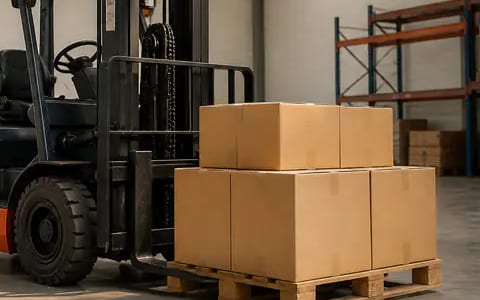
A competent person for the purposes of LOLER must be someone who is able to carry out a thorough examination of the lifting equipment, be familiar with the design of the lifting equipment, understand the manner in which the lifting equipment is used and understand the failure mode of the lifting equipment. This could be a specialist engineer and, indeed, is likely to be someone who is outside of your own staff.
Record-Keeping And Certification
A written record of the examination must be made and this must be kept for a specified period, normally 3 years. The report must detail what was examined, when it was examined, what was found and when the next examination is due. Many a business has lost lifting equipment inspections in move to new premises, lost in fire, or simply allowed them to lapse thinking that all is well with the equipment.
What Happens If You Ignore It
Improvement or prohibition notices will be served by the Health and Safety Executive where a business fails to carry out required examinations of its equipment. In serious cases, failure to comply with the requirements of LOLER can result in a prosecution. Such offences can attract substantial fines and, in cases of serious breach by a company, its directors and managers can be held personally responsible for the offences of the business.
The Insurance Angle
Even where business insurance covers lifting equipment, policy conditions may require evidence of valid LOLER Inspections. Where claims are made involving lifting equipment and no current certification exists, even where the cause of loss is unrelated to the lack of inspection, insurance will refuse to settle the claim. Most business insurance policies, especially those covering employer’s liability and/or damage to equipment, contain conditions in relation to lifting equipment which require valid LOLER Inspections to have taken place.
How LOLER Differs From PUWER
Whilst servicing under PUWER ensures that other work equipment is maintained in an efficient state of repair to function properly, the legal requirements of servicing under LOLER are distinctly different. Those responsible for managing equipment to comply with LOLER regulations are often surprised to learn that a perfectly maintained forklift will not be compliant if its LOLER inspection is not up to date.
Combining these duties to ensure lifting equipment is safely operated to comply with work equipment regulations creates additional obligations to those normally found for routine servicing. Failure to recognise these additional legal requirements for lifting equipment can cause problems for businesses.

Leave a Reply